
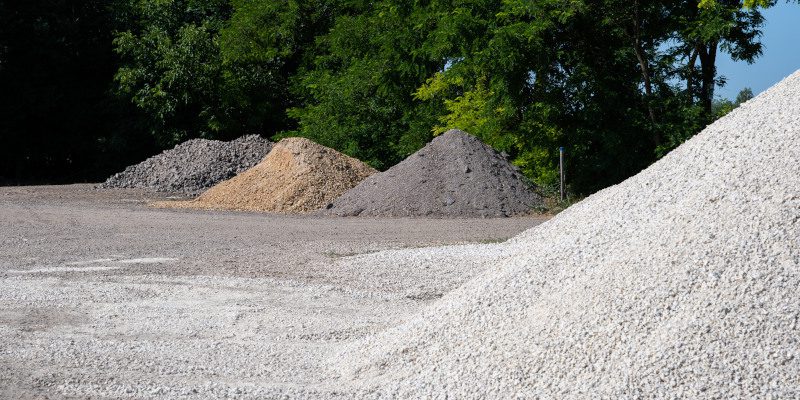
Gravel doesn’t seem complicated at first glance, but if you’re purchasing gravel for a driveway, a landscaping project, or a new foundation, you might be wondering what your options are. For instance, what are the differences between the different types and grades of gravel? If you’re feeling a little overwhelmed, our team at Flesherton Concrete Products is here to shed some light on the subject.
“Grades” of gravel don’t refer to a pass or fail standard for stone. Gravel grading refers to what size the individual gravel pieces are. Each grade of gravel has a different construction purpose. Finer grades, with smaller pieces of gravel, are better for finishing. Pea gravel is an example, with its smooth, round shape making it perfect for even the topmost layer of your graveled area, as it doesn’t have the sharp corners or rough edges of heavier grades.
Of course, larger grades of gravel like crushed stone have their place in construction as well. As a rule, the larger pieces of gravel are usually used earlier in the construction process, so they end up in the lower layers and can’t cut or hurt your feet as they aren’t exposed to the surface. Larger gravel pieces are also better for drainage, as more water can pass through the gaps between the stones. This makes them the perfect choice for the lower layers of driveway and road construction, and in laying foundations, as it keeps the water from stagnating and causing puddles or water damage.
If you have any additional questions, simply reach out to us today.